Rockets Can Reach Mars. But Can the Human Body Relearn Gravity?
A scientific and human reflection on Tai Chi, altered gravity, and the future of movement beyond Earth
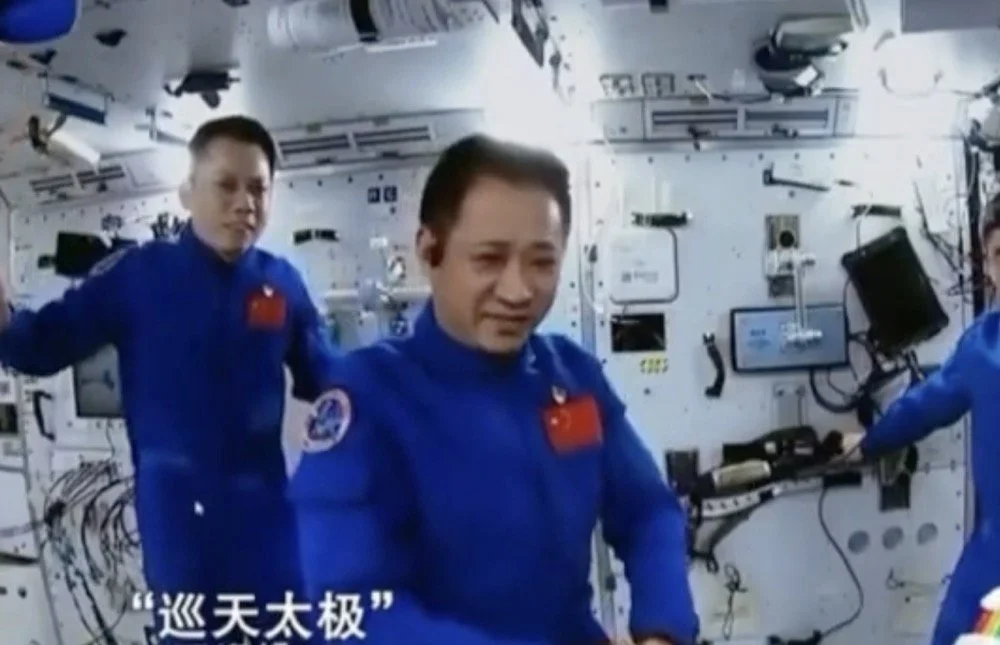
We often speak about Mars as if the greatest challenge is simply getting there.
Rockets, launch windows, propulsion systems, habitats, robotics, radiation shielding, and life-support systems dominate the public imagination. They should. Without engineering, no one leaves Earth. Yet human space exploration will not be solved by hardware alone. There is a second, quieter problem: what happens when an Earth-evolved body is asked to live, work, and remain calm in a gravity field it was never built to know?
By “humans,” I do not mean only professional astronauts, who undergo years of elite preparation, medical screening, exercise training, and operational rehearsal. I also mean the broader future human presence in space: commercial travelers, lunar-base personnel, researchers, artists, engineers, builders, and eventually communities whose daily lives may unfold beyond Earth. Before we can speak responsibly about living on the Moon or Mars, we must ask whether the human nervous system can adapt to worlds that do not speak the sensory language of Earth.
This question is personal to my work. Through Tai Chi, movement control, balance, and body regulation, I have come to see adaptation not only as a matter of strength, but as a matter of organization. A person does not become unstable only because muscles are weak. Instability often begins when the body can no longer clearly sense how weight, breath, attention, contact, and center of gravity are organized. A small gain in awareness can transform the quality of movement. A small loss of awareness can turn an ordinary step into a risk.
Gravity Is the Teacher We Forget
On Earth, gravity is so constant that it becomes almost invisible. Yet it is one of the oldest teachers of the human body. It teaches up and down, load and release, standing and falling, effort and rest. It shapes bones, muscles, vestibular organs of the inner ear, cardiovascular regulation, visual orientation, postural reflexes, and the brain’s internal map of the body.
Every ordinary movement is a negotiation with gravity. Standing from a chair, reaching for a cup, turning a corner, climbing stairs, stopping suddenly, or recovering after a stumble all require the nervous system to predict the interaction among weight, momentum, contact, and direction. We think we are simply moving. In reality, the body is continuously solving a physics problem through sensation.
Once humans enter space, that teacher changes the rules. In microgravity, the body is not simply “free.” More precisely, it loses familiar loading, familiar contact, and familiar spatial reference. Muscles and bones receive less mechanical stimulation. Fluids shift. Cardiovascular regulation changes. The vestibular system receives signals that no longer match lifelong expectations. The senses of up, down, front, and back can become less reliable.
NASA identifies altered gravity as a central cause of physiological deconditioning. Its exercise overview notes that spaceflight can reduce aerobic capacity, muscle strength, bone strength, visual function, and vascular function; it also emphasizes that deconditioning can begin quickly and varies by individual, mission duration, starting fitness, age, and gravity level [1]. NASA separately identifies altered sensorimotor and vestibular function as a mission risk because gravity transitions can trigger motion sickness, disorientation, difficulty with vehicle controls, trouble leaving a spacecraft, and impaired performance during surface tasks [2].
This means that space travel is not merely the transport of a body across distance. It is the placement of an Earth-trained organism inside a radically altered field of sensation. A rocket can carry the body to Mars. Training must help the body belong there.
Deconditioning Is More Than Strength Loss
The future of space health cannot be built only around the question, “How do we prevent physical decline?” That question remains essential. Astronauts already depend on resistance exercise, aerobic conditioning, cycling devices, treadmills, and specialized resistive systems to protect muscle, bone, cardiovascular capacity, and mission performance [1]. Long-duration missions will continue to require these countermeasures.
But strength is not the same as orientation. Muscle is not the same as coordination. Bone loading is not the same as confidence in movement. A crew member can be physically strong and still misjudge timing, over-brace during a manual task, drift unexpectedly, lose balance after landing, or feel disoriented when the body’s sensory map no longer agrees with the environment.
This distinction matters profoundly for Mars. Martian gravity is about 38 percent of Earth gravity. It is not weightlessness, and it is not Earth. It is a third condition: enough gravity to walk and work, but not enough to reproduce the familiar loading through which humans learned to move. That intermediate state may be deceptive. A person may feel capable while the body is quietly adapting to reduced weight, altered gait rhythm, different impact forces, and new relationships between inertia and contact.
For this reason, future training should not aim only to preserve force output. It should also train sensorimotor intelligence: the ability to perceive load, regulate tension, shift support, coordinate the trunk and limbs, manage reaction forces, and recover smoothly from error. In space, the body must not only be strong; it must remain teachable.
Why Tai Chi Belongs in the Scientific Conversation
This is where Tai Chi enters the discussion. The claim must be stated with care. Tai Chi cannot replace aerobic training, resistance training, medical monitoring, or engineered exercise systems. It is not a substitute for a space gym. It has not yet been validated as an astronaut countermeasure. The scientific claim should be modest, specific, and testable.
The stronger claim is that Tai Chi offers a distinctive framework for studying movement regulation. Its value is not merely that it is ancient, graceful, low-impact, or culturally meaningful. Its value is that it treats human movement as a continuous process of sensing, organizing, releasing, stabilizing, redirecting, and adapting.
In modern movement-science language, Tai Chi integrates capacities that are often trained separately: slow center-of-mass transfer, postural control, proprioceptive awareness, breath regulation, attentional control, upper- and lower-body coordination, muscular relaxation without collapse, movement smoothness, and emotional steadiness. In traditional language, it trains empty and full, softness and structure, motion and stillness, intention and breath.
The empty-full transformation in Tai Chi can be interpreted scientifically as the gradual redistribution of load and readiness between one side of the body and the other. The principle of whole-body connection can be interpreted as kinetic-chain coordination: force and intention travel from the feet and pelvis through the trunk to the shoulders, elbows, wrists, and hands. The instruction to remain “relaxed but not collapsed” describes low-tension stability: enough tone for control, but not so much stiffness that movement becomes inefficient.
The slowness of Tai Chi is therefore not a weakness. It is a microscope. When movement slows down, instability becomes visible. Excessive tension, drifting posture, poor timing, asymmetry, weak foot placement, and disrupted breathing can no longer hide behind speed. Tai Chi is not slow movement for the sake of slowness; it is a method for making hidden instability observable.
From Tradition to Testable Hypothesis
The scientific question is not whether Tai Chi already “works” in space. The necessary studies have not yet been done. The better question is: which Tai Chi-derived principles can be translated into measurable training modules for altered-gravity adaptation?
Future studies could examine whether Tai Chi-based stepping improves center-of-pressure control, gait stability, and movement confidence under partial body-weight unloading. Researchers could test whether waist-led upper-limb movement reduces unnecessary whole-body drift during reaching or tool-use tasks in simulated reduced gravity. They could measure heart-rate variability, breathing regularity, movement smoothness, electromyographic co-contraction, reaction-force control, and recovery from perturbation.
The key is to avoid two opposite errors. One is to romanticize Tai Chi as a mysterious solution to space health. The other is to reduce it to generic gentle exercise and miss its central insight: movement quality is a form of regulation. A rigorous approach would preserve the logic of Tai Chi while testing it with biomechanics, neuroscience, human factors, and psychophysiology.
This approach also connects space research with a growing body of terrestrial evidence. Tai Chi has been studied for balance, fall prevention, sensory integration, stress reduction, and autonomic regulation in Earth-based populations [4,5]. These findings do not prove usefulness for astronauts, but they make the hypothesis scientifically reasonable. A practice that trains balance, breathing, attention, and coordinated weight transfer on Earth may offer useful principles for studying adaptation when Earth’s gravity is no longer the default teacher.
A Low-Resource Model for Future Space Life
Future Moon and Mars crews will live within constraints: limited volume, limited mass, limited time, limited privacy, and high operational demand. Training systems must be effective, but they must also be sustainable. A useful practice for future space life should ideally be quiet, adaptable, low-resource, and able to support both movement quality and mental steadiness.
Tai Chi has several features that make it worth studying in this context. It can be practiced in small spaces. Its speed, stance width, loading, range of motion, and breathing emphasis can be adjusted. It can be divided into modules: standing balance, supported stepping, trunk rotation, upper-limb coordination, breath-movement coupling, and seated or anchored versions for environments where ordinary standing is impossible. It may also be combined with elastic resistance, wearable sensors, virtual-reality tasks, haptic feedback, partial-weight support, or underwater analog training.
This does not mean a traditional Tai Chi form should simply be copied into a spacecraft. In true microgravity, the ground reaction forces that support traditional stepping are profoundly changed. The practice would have to be redesigned. Empty-full might become anchor-release. Weight transfer might become contact management. Rooting might become controlled attachment to a handhold, foot loop, wall surface, or harness. The principle survives, but its expression changes.
That is precisely why Tai Chi is scientifically interesting. It is not merely a set of fixed movements. At its best, it is a system for adapting principles to changing conditions.
Training the Body to Listen
As humanity prepares for the Moon, Mars, and beyond, space training should include strength, endurance, nutrition, medicine, radiation protection, and high-technology countermeasures. But it should also ask a more subtle question: how does the body learn to listen again when the environment stops speaking in familiar terms?
In altered gravity, the body needs a new literacy. It must learn to read reduced load, altered contact, shifted fluids, changed orientation cues, suit constraints, and operational stress. Tai Chi may provide one model of such literacy. It trains attention to weight, breath, center, timing, and continuity. It teaches that control is not force alone, that softness can be structural, and that adaptation begins with perception.
Perhaps future Mars preparation will not take place only in high-technology laboratories. It may also include slow, quiet, precise movement: movement that teaches the body to notice drift before it becomes instability, tension before it becomes fatigue, and disorientation before it becomes danger.
The Larger Question
The race to Mars is not only a race of rockets, engines, habitats, and machines. It is also a test of whether the human body can remain steady when gravity no longer feels like home.
If the first age of space exploration asked, “Can we get there?” the next age must ask, “Can we live there well?” That question belongs not only to engineers, physicians, and astronauts. It belongs to everyone interested in the future of human adaptation.
A rocket can reach Mars. But the human body must relearn gravity. And perhaps one of the oldest movement traditions on Earth can help us ask the right new questions about how that relearning might begin.
Author’s Note and Acknowledgment
These reflections were inspired by ideas I explored in my recent paper, “Tai Chi for Space: A Regulatory Countermeasure Framework for Human Adaptation to Altered Gravity” [6].
I gratefully thank Dr. Jonathan H. Jiang for his expert advice on this subject, especially his guidance in connecting human space exploration, altered-gravity adaptation, and the scientific study of Tai Chi as a testable movement-regulation framework.
DOI: https://doi.org/10.57612/JS26.JTS.05.06
Selected Scientific Context
[1] NASA. OCHMO-TB-031 Exercise Overview: Astronaut physiological deconditioning and exercise prescription countermeasures in spaceflight. NASA/SP-20250000273.
[2] NASA. Risk of Altered Sensorimotor and Vestibular Function. Human Health and Performance risk overview.
[3] Scott JM, Feiveson AH, English KL, Spector ER, Sibonga JD, Dillon EL, et al. Effects of exercise countermeasures on multisystem function in long-duration spaceflight astronauts. npj Microgravity. 2023;9:11. doi:10.1038/s41526-023-00256-5.
[4] Chen W, Li M, Li H, Lin Y, Feng Z. Tai Chi for fall prevention and balance improvement in older adults: a systematic review and meta-analysis of randomized controlled trials. Front Public Health. 2023;11:1236050. doi:10.3389/fpubh.2023.1236050.
[5] Cui J, Li D, Li L, Li X, Zhang Y, Chen X, et al. The effects of Tai Chi on standing balance control in older adults may be attributed to the improvement of sensory reweighting and complexity rather than reduced sway velocity or amplitude. Front Aging Neurosci. 2024;16:1330063. doi:10.3389/fnagi.2024.1330063.
[6] Yangchen X. Tai Chi for Space: A Regulatory Countermeasure Framework for Human Adaptation to Altered Gravity. Journal of Taiji Science. 2026. doi:10.57612/JS26.JTS.05.06.
By Xueyuan Yangchen
Edited Jonathan
